Wondering if life fits you better in the heart of Nashville or in a nearby suburb? You’re not alone. The right answer depends on your budget, commute, space needs, and the kind of day-to-day rhythm you want. In this guide, you’ll get clear, sourced comparisons on housing, commutes, schools, and lifestyle so you can choose with confidence. Let’s dive in.
How to frame your decision
- Budget: Set a price range, then compare neighborhoods that fit. Add recurring costs like taxes, HOA, utilities, and commute.
- Commute: Test your door-to-door trip during actual peak times. If you need transit, confirm frequency first.
- Space and lot size: Decide if you prefer a smaller urban footprint or a larger yard and subdivision amenities.
- Schools and services: Review district information and specific school metrics where relevant.
- Long-term outlook: Consider development pipelines, new construction nearby, and likely resale demand.
Housing options and price ranges
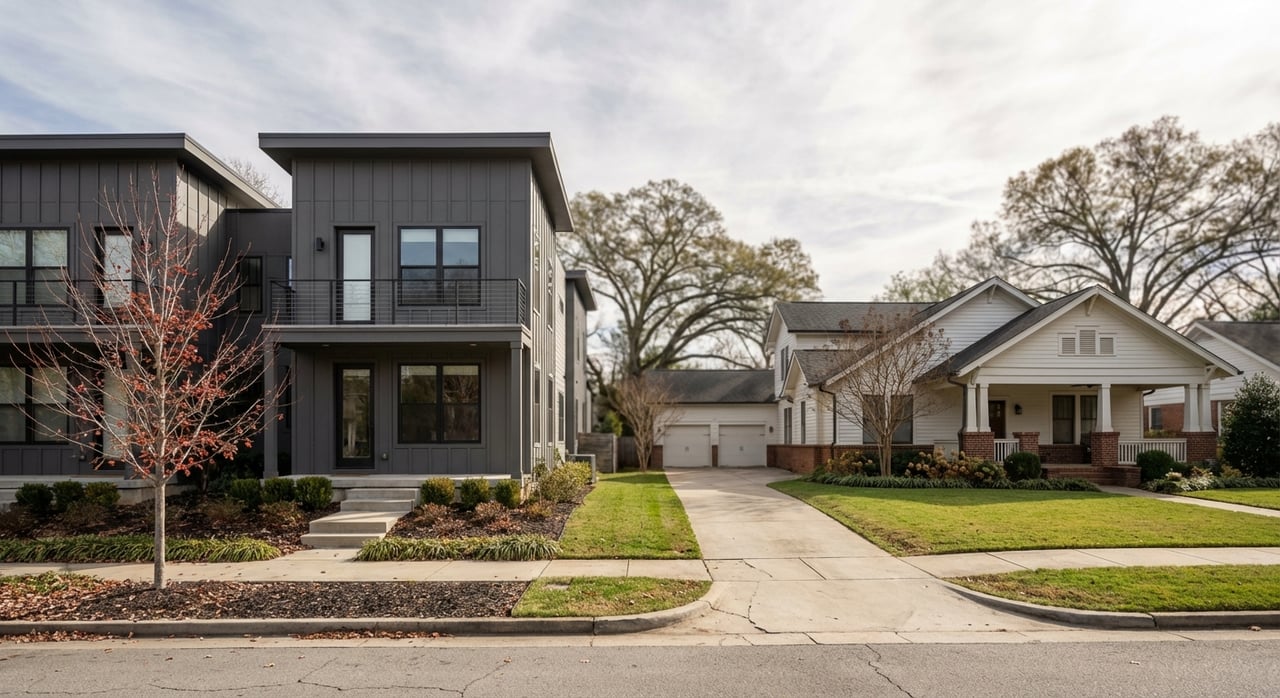
Housing mix varies across the metro. Nashville’s core has a higher share of condos, townhomes, and smaller-lot single-family, while suburbs lean toward detached single-family in planned communities. Use these vendor snapshots as directional ranges, then verify with on-the-ground comps.
Nashville at a glance
- Market values: Zillow’s Home Value Index showed roughly 420,000 to 440,000 dollars as of January 31, 2026. High-demand core neighborhoods can be higher.
- Baselines: Owner-occupied rate near 52 percent and an ACS median owner-occupied value around 413,600 dollars (ACS 2020–2024). Population is about 705,000 with a mean commute near 24.7 minutes. See U.S. Census QuickFacts for Nashville for baseline context (U.S. Census QuickFacts).
What this means for you: If you want walkable pockets, cultural venues, and shorter trips to downtown employers, the city side offers options at a range of price points, with more attached housing and smaller private lots.
Murfreesboro and Smyrna
- Murfreesboro: Many neighborhoods land in the mid 300,000s to low 400,000s, with new construction and established subdivisions offering different tradeoffs. Mean commute is about 26.7 minutes (ACS 2020–2024). For baselines, see Murfreesboro’s QuickFacts page (U.S. Census QuickFacts).
- Smyrna: Recent vendor snapshots show median sale prices around the mid to high 300,000s as of January 2026, with listing medians sometimes higher depending on zip and product type. Mean commute is about 26.8 minutes (ACS 2020–2024). See Smyrna’s QuickFacts for baselines (U.S. Census QuickFacts).
What this means for you: You’ll often find more square footage and yard for the money compared with many core Nashville options, plus strong access to suburban retail, parks, and new-home amenities.
Franklin
- Pricing: Franklin typically sits above the metro median, with higher per-square-foot pricing and a large share of single-family homes. The ACS median owner-occupied value is substantially higher than the regional average (2020–2024).
- Commute: Mean travel time of about 23.9 minutes (ACS 2020–2024). See Franklin’s QuickFacts for baselines (U.S. Census QuickFacts).
What this means for you: Expect premium pricing, established neighborhoods, a historic downtown, and robust amenities. Many buyers prioritize Franklin for district metrics and lifestyle, then calibrate budget to fit.
Mount Juliet
- Pricing: Vendor snapshots show median sale and list prices commonly in the 500,000 to 600,000 dollar range depending on zip and product type as of late 2025 to early 2026.
- Commute: Mean travel time sits over 30 minutes (ACS 2020–2024), among the longer averages in this set. See Mount Juliet’s QuickFacts for baselines (U.S. Census QuickFacts).
- Transit note: Mount Juliet has access to the WeGo Star commuter rail into downtown, but the schedule is limited and geared to weekday peaks.
What this means for you: If you want a mid-ring suburban feel with some rail access, Mount Juliet can fit. Confirm the train schedule aligns with your work hours before you count on it.
A quick summary of price ranges
- Nashville: Often around 420,000 to 440,000 dollars metro-wide as of January 2026, with wide neighborhood variation.
- Murfreesboro: Mid 300,000s to low 400,000s common, with both resale and new construction options.
- Smyrna: Mid to high 300,000s by recent sale medians, with some list medians higher depending on zip.
- Mount Juliet: Many neighborhoods trade in the 500,000 to 600,000 dollar band.
- Franklin: Frequently higher than the metro median, with a meaningful share above 500,000 dollars.
Note on lots and space: Core Nashville offers smaller private lots and attached living. Suburbs generally provide larger yards and subdivision amenities. Lot size varies by subdivision and zoning, so sample recent listings in your target zip to see what is typical.
Commute and transportation tradeoffs
- Average times: ACS 2020–2024 mean travel times show Nashville around 24.7 minutes, Murfreesboro 26.7, Smyrna 26.8, Franklin 23.9, and Mount Juliet over 30. Use the relevant city pages for baselines (Nashville QuickFacts, Murfreesboro QuickFacts, Smyrna QuickFacts, Franklin QuickFacts, Mount Juliet QuickFacts).
- Transit options: WeGo bus service expanded in January 2026, and the WeGo Star commuter rail runs limited peak trips from Lebanon and Mount Juliet to downtown. Always check the current schedule before counting on it (WeGo Public Transit updates).
- Traffic reality: National congestion studies place Nashville among metros with significant peak-hour delay. Your drive can vary widely day to day, especially into and out of the core (Forbes on INRIX congestion).
Practical tip: Run live mapping for your exact route during your actual peak windows, both directions. If you are considering the train, do a full door-to-door test that includes parking, transfer time, and the final leg.
Lifestyle, schools, and services
- Urban energy vs suburban rhythm: Downtown and near-core Nashville offer walkability, culture, and dense dining and music options. Suburbs like Franklin and Murfreesboro provide parks, retail centers, and planned community amenities.
- Schools: Many buyers look closely at district information. Coverage often highlights Williamson County Schools among the state’s top performers, which draws interest to Franklin and nearby areas. Always confirm specific school metrics and boundaries using official and third-party resources (WSMV coverage of district rankings).
- Jobs and healthcare: Nashville’s economy includes a major healthcare cluster with large employers and specialized services concentrated in and around the city’s core (Nashville Chamber on healthcare cluster). If job location is a key factor, map a reverse commute to that campus from each suburb you’re considering.
Taxes and cost of living
Tennessee does not tax wage income, which helps many households. The state relies more on sales and property taxes, and combined sales tax rates are higher than the U.S. average. Property tax bills vary by county and by assessed value, so a higher home price can mean a higher bill even if the rate is moderate. For high-level context, review statewide competitiveness and tax structure resources (Tax Foundation overview).
Action step: When you narrow your search, run sample property tax estimates on candidate addresses, then compare those annual costs alongside HOA dues and commute expenses.
Decision checklist you can use today
- Define your monthly comfort zone. Include principal, interest, taxes, insurance, HOA, and an estimate for utilities and commute.
- Rank your must-haves: number of bedrooms, lot size, garage, home office, and preferred build age or style.
- Test your commute twice during rush hour. Note best and worst cases, not just the average.
- Validate schools and services. Use official district resources and trusted third-party tools, and confirm any magnet or open-enrollment options.
- Stress-test resale. Consider new construction nearby, major road projects, and community amenities that support long-term demand.
Example paths to a great fit
- You want walkability and urban convenience: Explore Nashville’s core and near-core neighborhoods, then right-size your space and parking expectations to fit the budget.
- You want more space on a similar budget: Compare Murfreesboro and Smyrna. You’ll often find larger homes and yards, with commutes that can work if your hours are flexible.
- You want premier amenities and are prepared for higher prices: Focus on Franklin and surrounding Williamson County communities. Confirm your commute and school priorities early.
- You want a mid-ring suburb and the option of commuter rail: Look at Mount Juliet, and make sure WeGo Star’s schedule aligns with your workday.
Ready to compare homes across the map?
If you’re weighing city convenience against suburban space, the smartest move is to get neighborhood-level data and live comps that fit your budget and schedule. Our team pairs appraisal-informed pricing with local insight across Murfreesboro, Smyrna, Franklin, Mount Juliet, and Nashville. Start a tailored plan with Jessica Simpson.
FAQs
What are 2026 home price ranges in Nashville and nearby suburbs?
- Nashville is often around 420,000 to 440,000 dollars metro-wide, Murfreesboro mid 300,000s to low 400,000s, Smyrna mid to high 300,000s, Mount Juliet 500,000 to 600,000, and Franklin typically higher than the metro median, based on vendor snapshots through late 2025 to early 2026 and ACS baselines.
How long is the commute from Murfreesboro to downtown Nashville at rush hour?
- ACS shows a mean of about 26.7 minutes for Murfreesboro, but peak-hour drives can run longer; test your exact route during your typical start and end times to capture real-world variability.
Which suburb near Nashville has commuter rail access?
- Mount Juliet has WeGo Star service into downtown on a limited, peak-focused schedule; confirm current times and fit before relying on it.
Are property taxes lower in the suburbs around Nashville?
- Property tax bills depend on assessed value and county rates, so a higher-priced suburb can mean a larger bill even if the rate is moderate; compare specific addresses side by side.
Is Franklin more walkable than other suburbs?
- Central Franklin includes walkable historic blocks and strong amenities, while most suburban areas across the region remain car-oriented; evaluate the exact neighborhood for walkability.
How do public schools compare across Nashville and the suburbs?
- District performance varies; coverage frequently highlights Williamson County Schools among the state’s top performers, but you should verify school-level metrics and current boundaries for your address.